history
Follow the Path of the Samurai and Discover the Warlord History of Kofu
Last update: April 21, 2026
*This article has been translated by an AI translation tool.
*All images are for illustrative purposes only.
Takeda Shrine
A sanctuary for victory, dedicated to the legendary warlord Takeda Shingen.
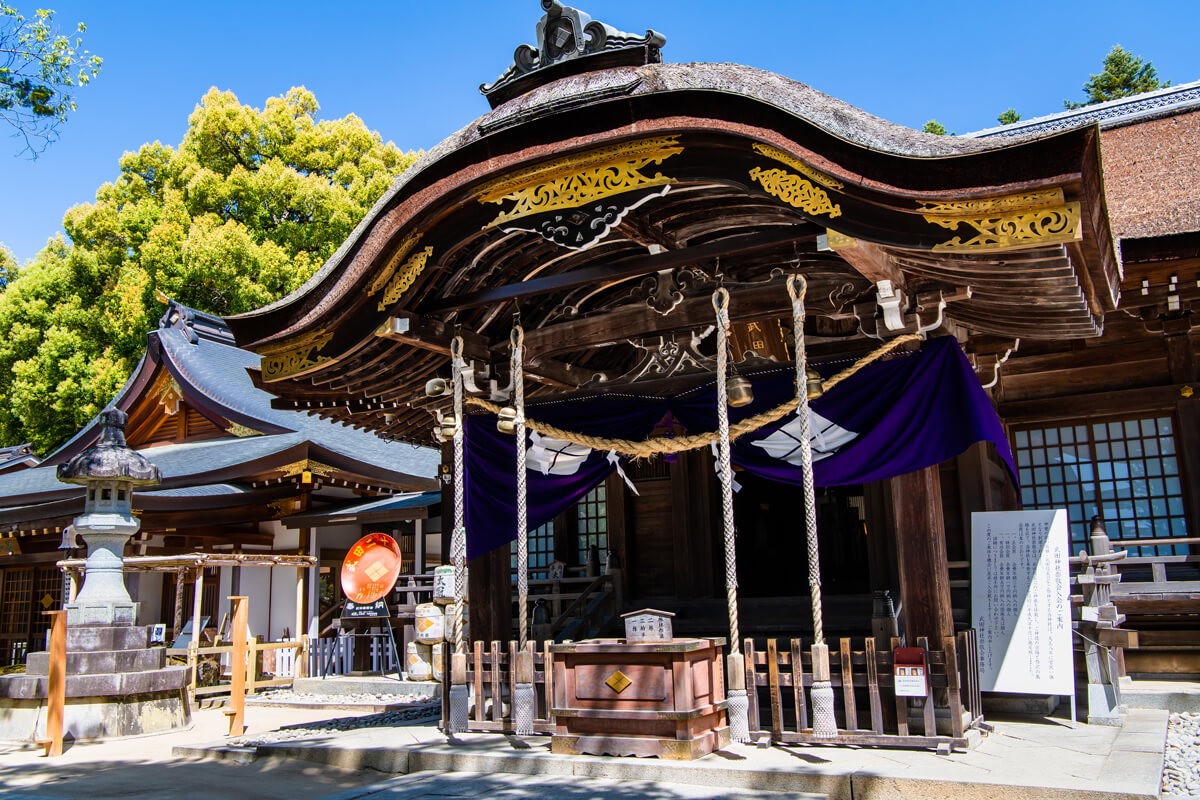
Dedicated to Takeda Shingen, one of the most iconic warlords of the Sengoku (Warring States) period, Takeda Shrine was established in 1919. It stands on the grounds of the former Tsutsujigasaki Palace, which served as the fortified residence for three generations of the Takeda clan for over 63 years. Designated as a National Historic Site, the shrine grounds still preserve original moats, earthen walls, stone foundations, and ancient wells, making it a captivating destination for history enthusiasts.
The shrine is most famous for its blessings of "victory." People from across the country visit this premier spiritual site in Yamanashi year-round, seeking divine support not only to triumph in specific endeavors but to "win in life" and "overcome one's own weaknesses."
Inside the grounds, you will find the rare "Three-Needle Pine." Unlike the typical two-needle variety, these needles turn a brilliant golden hue in autumn, and it is said that placing one in your wallet will bring financial fortune. Other highlights include the "Takeda Suikinkutsu" (a traditional water chime) and the "Princess Well" (Hime-no-Ido). Legend says its waters were used for the first bath of Shingen's daughter; today, it is cherished for its blessings of longevity and healing.
The Treasure Museum is a must-see, featuring the "Yoshioka Ichimonji" tachi sword—a National Important Cultural Property—alongside Shingen's portraits, samurai armor, and ancient manuscripts. Every year on April 12th, the anniversary of Shingen’s passing, the Grand Festival and the "Takeda 24 Generals Cavalry Procession" draw massive crowds as Kofu’s largest event. With beautiful cherry blossoms in spring and fiery maples in autumn, the shrine offers stunning seasonal views and highly sought-after "Kirie" (paper-cut) Goshuin stamps.
2611 Kofuchu-machi, Kofu City, Yamanashi Prefecture
Ryuo (Shingen-tsutsumi Park)
One of Japan’s largest flood control heritage sites from the Sengoku period, built by Takeda Shingen.
Located in Ryuo, Kai City, Yamanashi Prefecture, the Shingen-tsutsumi is a masterpiece of Japanese civil engineering. It was built during the Sengoku (Warring States) period by the legendary warlord Takeda Shingen to tame the frequently flooding Kamanashi River. Completed around 1560, this massive project took approximately 70 years and utilized the innovative "Koshu-style" flood control method. By combining embankments with unique structural features like "Shogi-gashira" (v-shaped breakwaters) to divert and weaken the water's force, Shingen successfully protected the farmland and transformed the Kofu Basin into a fertile agricultural region. This site remains a testament to Shingen’s visionary leadership and advanced engineering skills.
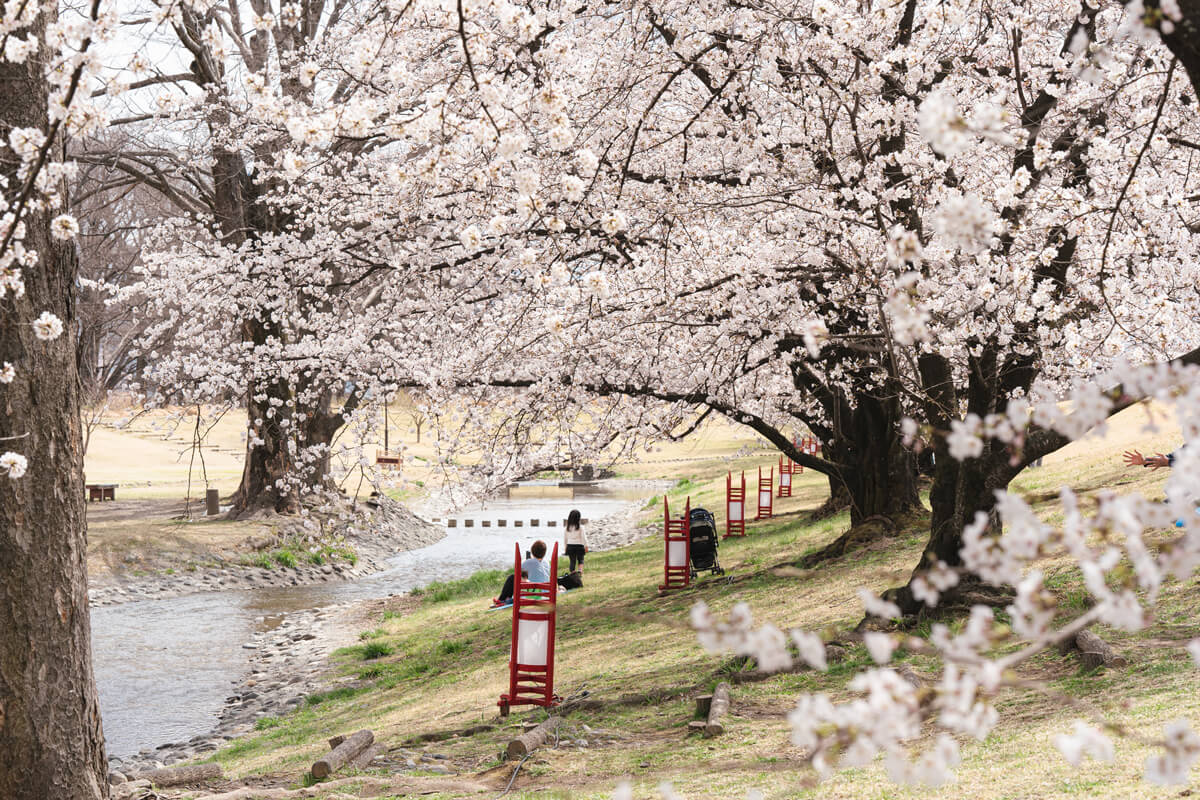
The embankment on the Ryuo side stretches for approximately 5 kilometers. Along the section maintained as Shingen-tsutsumi Park, you will find a historic promenade lined with massive zelkova and hackberry trees, said to have been planted during the Edo period and aged over 200 years. This path offers a beautiful blend of history and nature. Adjacent to the river, Kamanashi River Sports Park provides additional space for recreation, making it a popular getaway where people of all ages from both inside and outside the city come to relax on weekends.
From the benches, you can enjoy a panoramic view of the majestic Southern Alps. In spring, the park becomes a premier cherry blossom viewing spot as the Yoshino and Taihaku cherry trees—the official flower of Kai City—burst into full bloom. During autumn, the fiery fall foliage is beautifully illuminated, showcasing nature’s ever-changing beauty. The Kamanashi River is also famous for sweetfish (ayu) fishing, drawing enthusiasts from across the region during the fishing season.
1989 Ryuo, Kai City, Yamanashi Prefecture (Shingen-tsutsumi Park)
Kai Zenko-ji Temple
A grand wooden temple built by Shingen to save treasures from war.
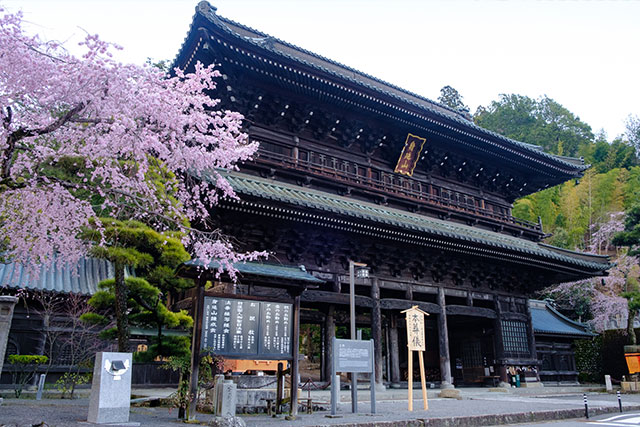
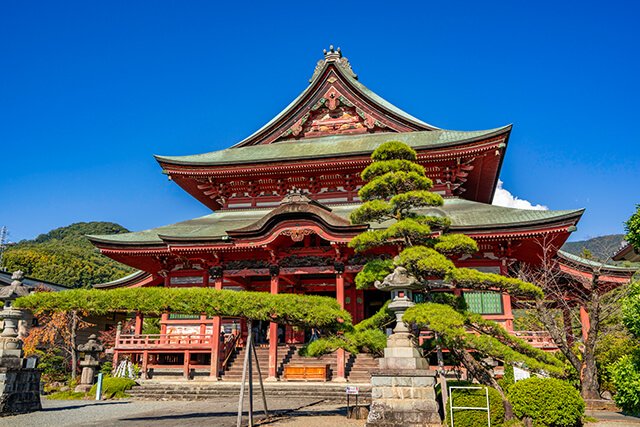
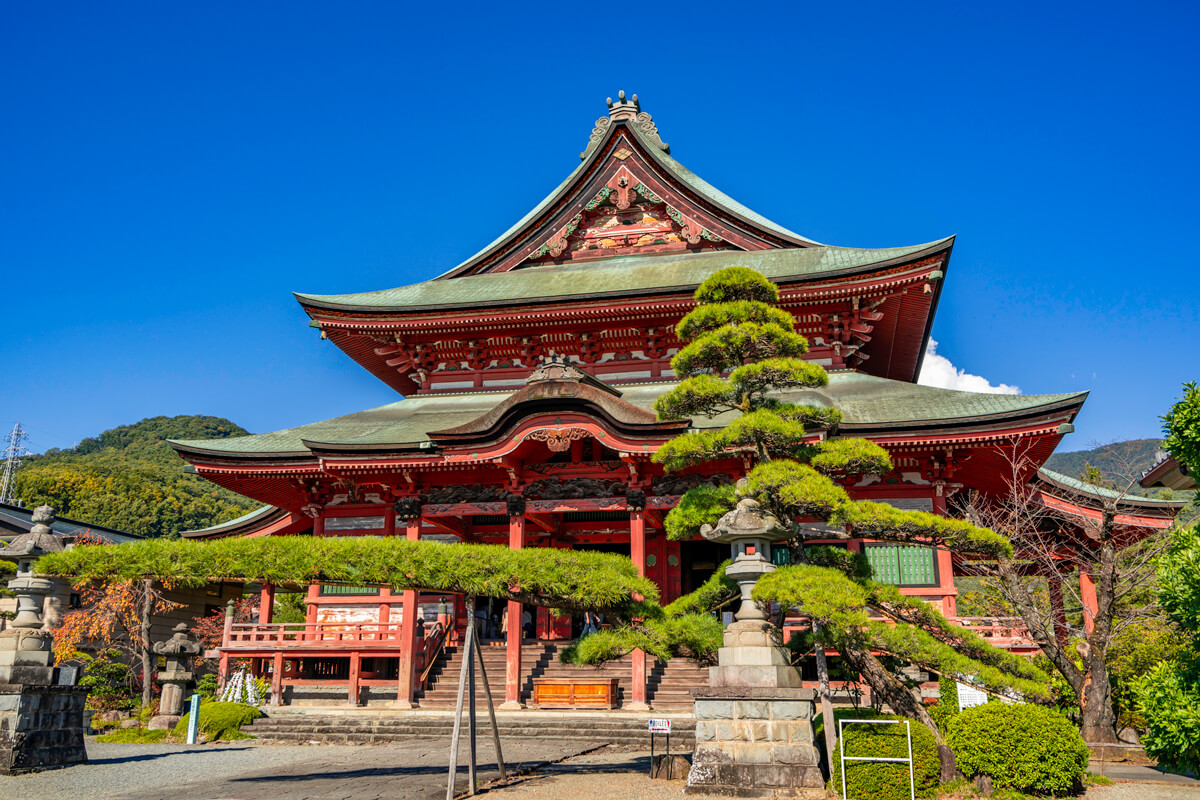
The official name is Jōgaku-san Jōchi-in Zenkō-ji (Jodo Sect). It was founded in 1558 when the legendary warlord Takeda Shingen, concerned that Shinano Zenko-ji would be destroyed during the Battles of Kawanakajima, moved the principal Amida Nyorai statue, other Buddhist treasures, and monks to the Kai region. After the fall of the Takeda clan, the temple received generous protection from Tokugawa Ieyasu and served as a memorial site for the Tokugawa family during the Edo period.
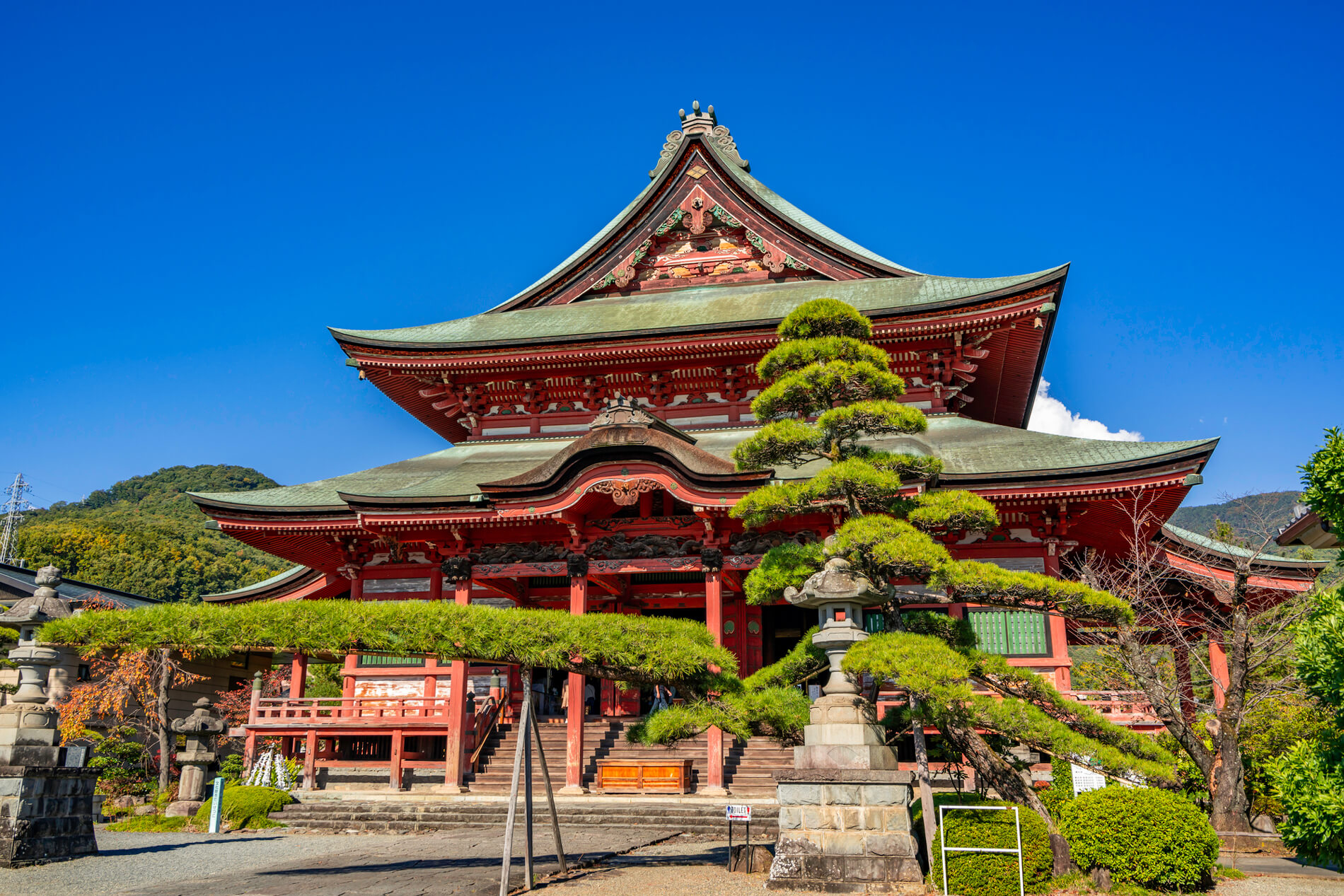
The main hall (Kondo) and the Sanmon gate are designated as National Important Cultural Properties. Built in the distinct "Shumoku-zukuri" style, the main hall is one of the largest wooden structures in Eastern Japan, boasting a magnificent scale of 38m wide, 23m deep, and 26m high.
On the ceiling of the central hall, two colossal dragons are painted by the Edo-period artist Kisai. This spot is famous for Japan’s largest "Naki-ryu" (Crying Dragon) phenomenon; when you clap your hands directly beneath the paintings, the multi-layered echoes create a powerful resonance.
Visitors can also experience "O-kaidan Meguri," a mystical journey in total darkness beneath the main hall. Similar to the famous ritual at Nagano's Zenko-ji, participants feel their way through the dark to find "the key to paradise." Every seven years, a rare public unveiling of the sacred Buddha statue (Gokaicho) takes place.
The adjacent Treasure Museum exhibits numerous cultural assets, including the Amida Triad (an Important Cultural Property) and the oldest statues of Minamoto no Yoritomo and Sanetomo in Japan. During the spring cherry blossom season, the temple grounds are beautifully adorned, offering a breathtaking view where historic architecture and seasonal flowers blend in harmony.
3-36-1 Zenkoji, Kofu City, Yamanashi Prefecture